Table of Contents
More from Blog

07 Aug, 2026

22 Jul, 2026

15 Jul, 2026

25 Jun, 2026

15 Jun, 2026

08 Jun, 2026

01 Jun, 2026
30 Apr, 2026

25 Apr, 2026

20 Apr, 2026
15 Apr, 2026

26 Mar, 2026

22 Mar, 2026

18 Mar, 2026

14 Mar, 2026

15 Feb, 2026

05 Feb, 2026

28 Jan, 2026

20 Jan, 2026

24 Dec, 2025

16 Dec, 2025

26 Nov, 2025
14 Nov, 2025

24 Sep, 2025

21 Sep, 2025

16 Sep, 2025
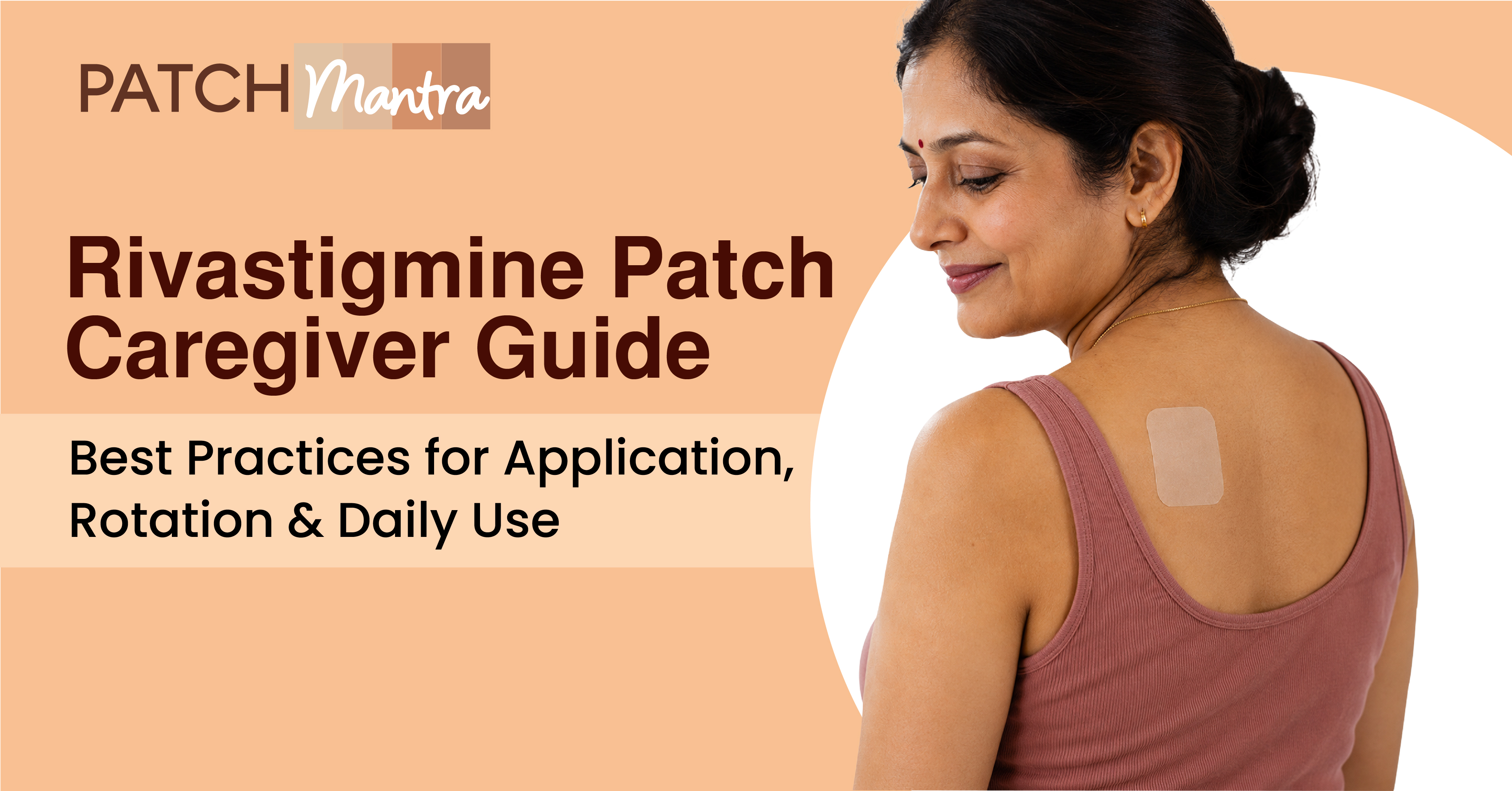
Rivastigmine Patch Caregiver Guide: Best Practices for Application, Rotation & Daily Use
30 Jul, 2026
4 Minutes to read
Introduction
Caring for someone with Alzheimer’s disease or Parkinson’s disease dementia can be physically and emotionally demanding. Medicines such as rivastigmine transdermal patches are commonly used to support memory, attention, and daily cognitive functioning in eligible patients.
For caregivers, proper patch application and rotation are extremely important to ensure consistent medication delivery and reduce skin irritation. Understanding how to use a dementia patch correctly can improve comfort, medication adherence, and daily care routines.
This caregiver guide explains rivastigmine patch placement, rotation schedules, application steps, and practical daily-use tips for Alzheimer’s and Parkinson’s dementia care.
What Is a Rivastigmine Patch?
Rivastigmine is a cholinesterase inhibitor used to manage symptoms associated with:
- Alzheimer’s disease
- Parkinson’s disease dementia
- Cognitive decline affecting memory and attention
Quick Answer
How do you use a rivastigmine patch correctly?
Apply the rivastigmine patch once daily to clean, dry, hairless skin on the upper back, chest, upper arm, or lower back. Remove the old patch before applying a new one and rotate application sites daily to reduce skin irritation.
How Rivastigmine Patches Work
High-Level Mechanism
Rivastigmine helps increase levels of acetylcholine, a neurotransmitter involved in memory, attention, and thinking processes.
The transdermal patch delivers medication gradually over 24 hours, which may help maintain stable drug levels throughout the day.
Why Some Caregivers Prefer Patches
Compared to oral medication, patches may offer:
- Once-daily convenience
- Easier administration
- Better medication adherence
- Reduced swallowing difficulty
- Potentially fewer stomach-related side effects
Rivastigmine Patch Placement Guide
Recommended Patch Areas
Healthcare guidance commonly recommends applying the patch to:
- Upper back
- Lower back
- Upper arm
- Chest
These areas should be:
- Clean
- Dry
- Hairless or minimally hairy
- Free from cuts or irritation
Areas to Avoid
Do not apply the patch:
- Over broken skin
- On rashes or irritated areas
- Near tight clothing seams
- Over lotion, oil, or powder
- On recently shaved skin
How to Rotate Rivastigmine Patch Sites
Why Rotation Matters
Using the same patch site repeatedly may increase:
- Skin redness
- Itching
- Irritation
- Adhesive sensitivity
Daily site rotation helps protect skin health.
Rotation Best Practices
Caregivers are generally advised to:
- Change the patch every 24 hours
- Rotate between left and right sides
- Avoid reusing the same exact area for at least 14 days
Helpful Caregiver Tip
Some caregivers write the day of the week on the patch or maintain a tracking notebook to avoid missed doses.
Step-by-Step Dementia Patch Application
How to Apply a Rivastigmine Patch
- Wash and dry the skin area
- Remove the old patch first
- Open the new patch carefully
- Apply firmly to the skin
- Press edges for 10–30 seconds
- Wash hands after handling the patch
Important Daily Use Rules
- Use only one patch at a time
- Replace every 24 hours
- Avoid direct heat exposure
- Do not cut the patch
- Keep patches away from children and pets
Common Caregiver Challenges
Patch Falling Off
If the patch loosens or falls off:
- Apply a new patch to a different area
- Continue the regular replacement schedule
- Avoid taping over damaged patches
Skin Irritation
Mild redness or itching may occur in some patients.
Seek medical advice if:
- Rash becomes severe
- Skin blisters develop
- Burning sensation persists
Forgetting Patch Changes
Caregivers often use:
- Phone alarms
- Medication calendars
- Patch rotation charts
- Daily caregiving checklists
Alzheimer’s Caregiver Tips for Daily Routine
Create a Consistent Schedule
Applying the patch at the same time each day may improve routine adherence.
Monitor Behavioural Changes
Caregivers should observe for:
- Increased confusion
- Nausea
- Appetite changes
- Dizziness
- Skin reactions
Any unusual symptoms should be discussed with a healthcare professional.
Support Patient Comfort
Many caregivers prefer placing the patch on the upper or lower back because patients may be less likely to remove it accidentally.
Hetriva Patch Overview
PatchMantra Hetriva Patch is a rivastigmine transdermal patch designed to support patients with Alzheimer’s disease and Parkinson’s disease dementia.
Key Features
Hetriva patch is designed for:
- Once-daily use
- Continuous rivastigmine delivery
- Cognitive symptom support
- Easier administration for elderly patients
Caregivers should always follow the prescribing doctor’s instructions regarding dosage and treatment schedules.
FAQ’s
Where is the best place to apply a rivastigmine patch?
Common application sites include the upper back, lower back, chest, and upper arm.
How often should rivastigmine patch sites be rotated?
The same exact skin area should generally not be reused for at least 14 days.
Can dementia patients bathe while wearing the patch?
Normal bathing and showering are usually allowed, but excessive heat exposure should be avoided.
What happens if two patches are applied accidentally?
Using multiple patches may increase the risk of serious side effects. Caregivers should seek immediate medical advice.
Can rivastigmine patches cause nausea?
Some patients may experience nausea or reduced appetite, especially during dose adjustments.
Key Takeaways
- Rivastigmine patches are used in Alzheimer’s and Parkinson’s dementia care.
- Proper application and daily rotation are essential.
- Patches should be changed every 24 hours.
- Avoid reusing the same skin site within 14 days.
- Caregiver tracking systems may improve medication adherence.
- Medical advice is important for side effects or skin reactions.
Conclusion
Managing dementia care requires consistency, patience, and proper medication support. Correct rivastigmine patch application, regular site rotation, and daily monitoring can help caregivers improve comfort and treatment adherence for patients with Alzheimer’s disease or Parkinson’s dementia.
PatchMantra focuses on transdermal healthcare innovations, including Hetriva Rivastigmine Patch solutions designed to support convenient once-daily dementia care under medical supervision.