Table of Contents
More from Blog

07 Aug, 2026

30 Jul, 2026

22 Jul, 2026

15 Jul, 2026

25 Jun, 2026

15 Jun, 2026

08 Jun, 2026
01 Jun, 2026

25 Apr, 2026

20 Apr, 2026
15 Apr, 2026

26 Mar, 2026

22 Mar, 2026

18 Mar, 2026

14 Mar, 2026

15 Feb, 2026

05 Feb, 2026

28 Jan, 2026

20 Jan, 2026

24 Dec, 2025
16 Dec, 2025

26 Nov, 2025

14 Nov, 2025

24 Sep, 2025

21 Sep, 2025

16 Sep, 2025
Diclofenac Patch for Sprain/Strain: When to Use It + How Fast It Works
30 Apr, 2026
5 Minutes to read
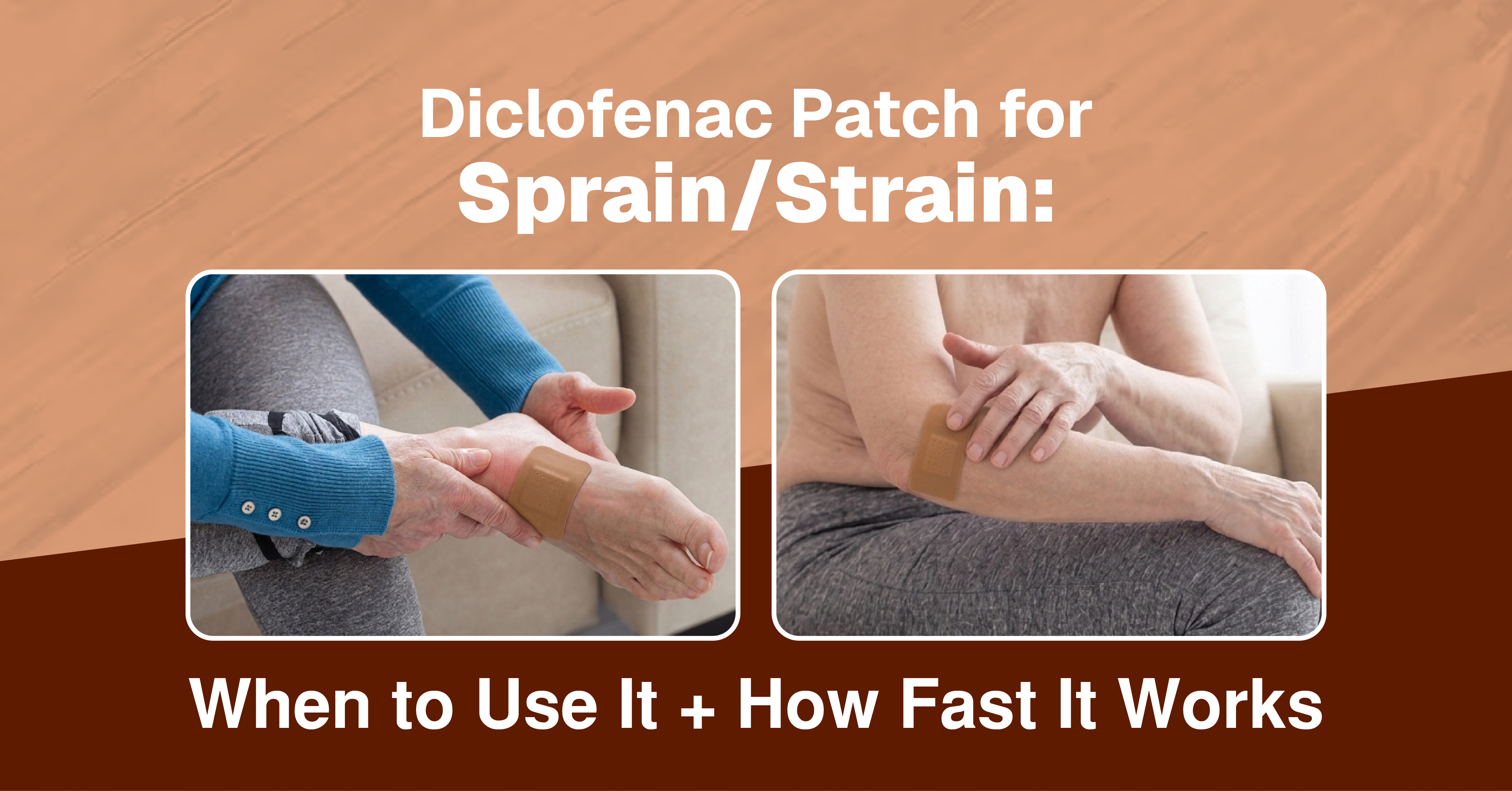
Muscle sprains and strains are among the most common injuries caused by sports, exercise, sudden movements, or daily physical activities. These injuries often cause pain, swelling, and limited mobility, making everyday tasks uncomfortable.
A diclofenac transdermal patch is a topical pain-relief treatment that delivers anti-inflammatory medicine directly through the skin to the injured area. It is commonly used for localised muscle pain, ligament sprains, and soft tissue injuries because it targets inflammation at the site of injury without significantly affecting the rest of the body.
Understanding when to use a diclofenac patch and how quickly it works can help individuals manage pain effectively and recover faster.
What Is a Diclofenac Patch?
A diclofenac patch is a topical non-steroidal anti-inflammatory drug (NSAID) applied directly to the skin over the painful area.
The medication works by blocking the production of substances that cause pain and inflammation, helping reduce swelling and discomfort at the injury site.
Because the medicine is delivered locally through the skin, it produces lower systemic exposure than oral painkillers, which may reduce certain side-effects associated with tablets.
These patches are commonly prescribed for:
- Muscle strains
- Ligament sprains
- Minor sports injuries
- Bruises and soft tissue inflammation
- Localised joint pain
Topical diclofenac patches are typically applied once or twice daily to the painful area, depending on the formulation and medical advice.
When Should You Use a Diclofenac Patch?
Diclofenac patches are most effective for acute musculoskeletal injuries where pain and inflammation are limited to a specific area.
1. Muscle strains
A muscle strain occurs when muscle fibres stretch or tear due to overuse or sudden movement. Common examples include back strain, hamstring strain, or calf muscle injury.
The patch helps reduce inflammation and pain, allowing muscles to relax and recover.
2. Ligament sprains
Ligament sprains often affect joints such as the ankle, wrist, or knee.
Applying a diclofenac patch to the injured joint may help reduce swelling and discomfort while supporting healing.
3. Sports injuries
Athletes and fitness enthusiasts frequently experience minor soft-tissue injuries during training or competition.
Topical NSAID patches can help manage pain while avoiding high systemic exposure from oral medications.
4. Localised joint inflammation
Inflammation around joints due to minor injury or overuse may respond well to topical anti-inflammatory therapy.
How Fast Does a Diclofenac Patch Work?
Many people want quick relief from injury pain. While topical treatments may take slightly longer than oral painkillers, diclofenac patches still provide effective relief.
Initial relief
Clinical research shows that pain reduction from diclofenac patches may begin within about four hours after application.
Ongoing improvement
With consistent use:
- Pain reduction can continue to improve over 1-3 days
- Anti-inflammatory effects build gradually in the injured tissue
- Continuous relief may last up to 12 hours per patch depending on the product formulation
Duration of treatment
For acute injuries such as sprains or strains, diclofenac patches are often used for several days up to a week depending on the severity of the injury and medical advice.
How to Apply a Diclofenac Patch Correctly
Correct application improves effectiveness and safety.
Step-by-step application
- Clean and dry the affected area of skin.
- Remove the protective liner from the patch.
- Apply the patch directly over the painful area.
- Press firmly to ensure it adheres properly.
- Replace according to recommended timing (usually every 12-24 hours).
Important precautions
Avoid applying the patch on:
- Broken or irritated skin
- Open wounds or infections
- Areas with severe rashes or dermatitis
These precautions help prevent irritation and ensure safe absorption.
Benefits of Diclofenac Patches for Injury Pain
Topical diclofenac patches offer several advantages compared with other pain treatments.
Targeted pain relief
Medication is delivered directly to the injured tissue.
Reduced systemic side effects
Lower drug levels circulate in the bloodstream compared with oral NSAIDs.
Convenience
Patches provide long-lasting relief without frequent dosing.
Ease of use
They are simple to apply and suitable for many everyday injuries.
When You Should Avoid Using Diclofenac Patches
Although generally safe when used correctly, diclofenac patches may not be suitable for everyone.
Avoid using them if:
- You are allergic to NSAIDs
- You have severe skin irritation at the application site
- You are advised against NSAIDs due to certain heart or stomach conditions
Consult a healthcare professional before use if you have existing medical conditions or are taking other medications.
Additional Recovery Tips for Sprains and Strains
In addition to topical pain relief, several measures can help speed recovery.
R.I.C.E method
- Rest - avoid stressing the injured area
- Ice - reduce swelling during the first 24-48 hours
- Compression - support the injured joint or muscle
- Elevation - minimise swelling
Gentle movement
Once pain begins to improve, gradual stretching and mobility exercises may help restore function.
Adequate recovery time
Returning to activity too quickly can worsen the injury, so allowing proper healing is important.
Frequently Asked Questions
1. Can diclofenac patches treat muscle sprains?
Yes. Diclofenac patches are commonly used to treat pain and inflammation caused by minor sprains, strains, and bruises.
2. How long does it take for a diclofenac patch to work?
Pain relief may begin within about four hours, with greater improvement over the next few days.
3. How often should a diclofenac patch be applied?
Many formulations are applied once or twice daily, depending on medical instructions.
4. Can I use a diclofenac patch during sports recovery?
Yes. These patches are commonly used for sports-related soft-tissue injuries to manage localised pain.
5. Are diclofenac patches safer than tablets?
Topical patches generally deliver lower drug levels to the bloodstream, which may reduce certain systemic side effects compared with oral NSAIDs.
Conclusion
Sprains and strains can cause significant discomfort and limit movement during daily activities or sports. Diclofenac patches provide targeted anti-inflammatory relief directly at the injury site, helping reduce pain and swelling without the need for frequent oral medication.
Pain relief can begin within a few hours of application and continue improving with consistent use over several days. When used correctly, diclofenac patches can be an effective part of injury management alongside rest, ice, and proper recovery care.
Products such as Trans-D Diclofenac Patch from PatchMantra are designed to deliver localised pain relief for muscle strains, ligament sprains, and other soft-tissue injuries, helping individuals manage discomfort and return to normal activities more comfortably.