Table of Contents
More from Blog

07 Aug, 2026
30 Jul, 2026

22 Jul, 2026
15 Jul, 2026

25 Jun, 2026
15 Jun, 2026

08 Jun, 2026
01 Jun, 2026
30 Apr, 2026

25 Apr, 2026

20 Apr, 2026
15 Apr, 2026
26 Mar, 2026

22 Mar, 2026

18 Mar, 2026

14 Mar, 2026
15 Feb, 2026

05 Feb, 2026

28 Jan, 2026
20 Jan, 2026
24 Dec, 2025

26 Nov, 2025
14 Nov, 2025

24 Sep, 2025
21 Sep, 2025

16 Sep, 2025
The Science Behind Painkiller Patches: How They Deliver Fast, Targeted Relief
16 Dec, 2025
8 Minutes to read
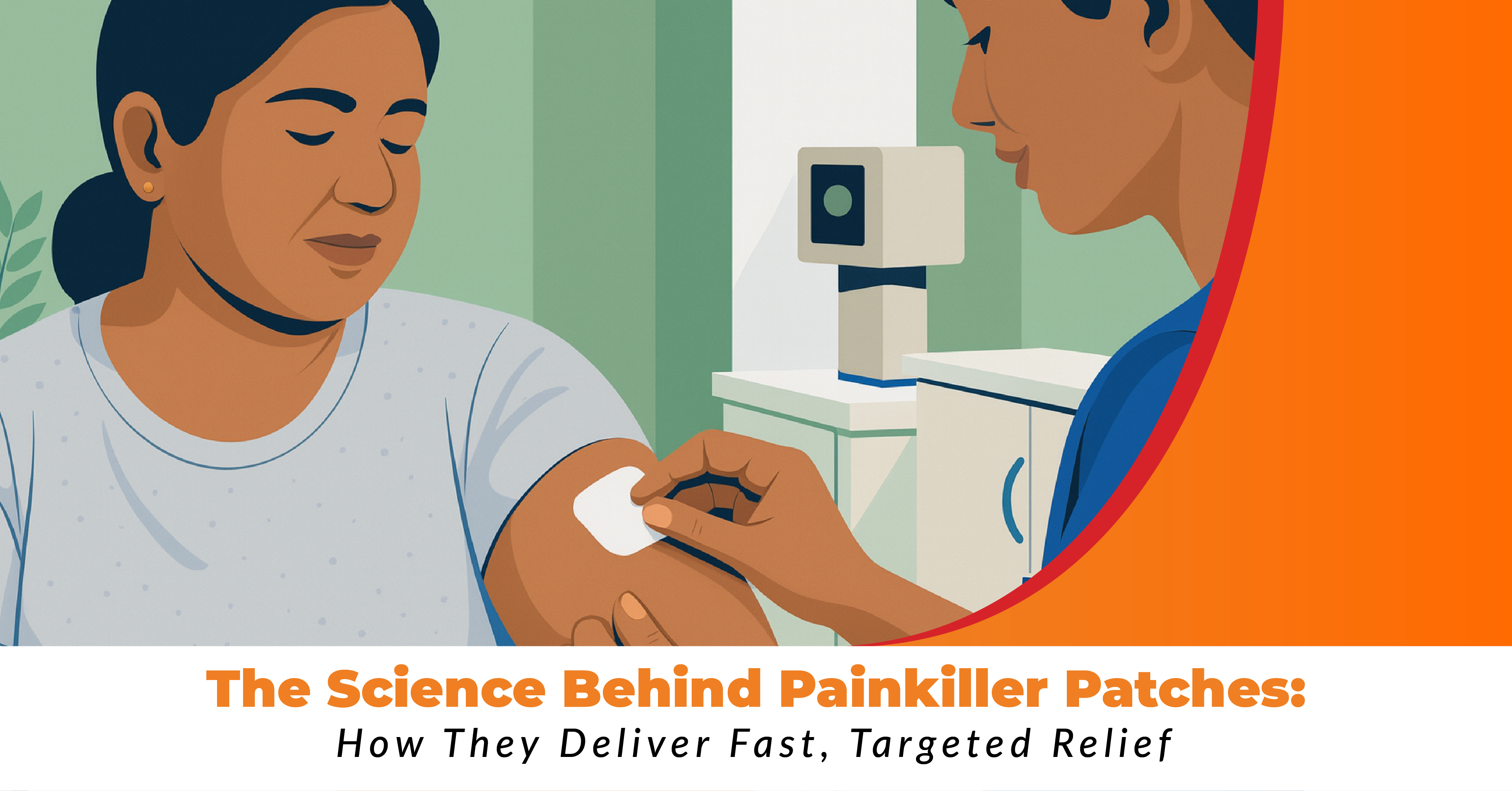
Pain affects everyone - whether it's a stiff neck from long hours at the desk, a backache after travel, knee pain after climbing stairs, or muscle strain from workouts. And while people often reach for oral painkillers, there's a new favourite in the world of pain management: Painkiller Patches.
You may have seen them, used them, or heard of them - but have you ever wondered how these thin, lightweight patches deliver such quick, targeted relief?
Let's break down the science in a simple, engaging way - and understand why products like PatchMantra's advanced transdermal patches are becoming the smarter choice for pain management.
What Exactly Is a Painkiller Patch?
A painkiller patch, also called a transdermal patch, is a medicated adhesive patch placed directly on the skin over the painful area. Its job?
- Deliver pain-relieving medicine through the skin
- Transport it directly to the affected tissues
- Provide consistent relief for hours
Unlike tablets that go through your digestive system, pain patches work from the outside in - making them faster, more targeted, and often safer.
Why Do Painkiller Patches Work Faster Than Pills?
Let's break it down.
When you swallow a painkiller tablet:
- It dissolves in your stomach
- Travels through your digestive system
- Passes into your bloodstream
- Gets metabolized by your liver
- Then reaches the site of pain
This entire process takes time.
But with a painkiller patch?
- Medicine enters the skin
- Reaches underlying tissues
- Bypasses digestion
- Works exactly where pain exists
That's why patches offer:
- Faster onset of action
- Higher local concentration of medicine
- Lower risk of side effects
This is called Transdermal Drug Delivery System (TDDS) - the core science of PatchMantra.
How Do Painkiller Patches Actually Work? The Science Explained
A painkiller patch has multiple layers, and each one plays a role. Think of it like a high-tech sticker designed for your skin.
The Drug Reservoir / Matrix Layer
This is where the actual medicine is stored.
Depending on the patch type, ingredients may include:
- Diclofenac
- Capsaicin
- Menthol
- Methyl salicylate
- Lidocaine
- Herbal analgesics
This layer holds the medicine in controlled quantities.
The Adhesive Layer
This helps the patch stick to your skin - but it isn't just glue.
High-grade medical adhesives allow:
- breathability
- even drug release
- skin comfort
Good adhesives keep the patch secure even during movement.
The Release Liner
When you peel the patch before use, this liner comes off.
It protects the medicines from contamination before application.
The Backing Layer
This is the outer layer that blocks water, dust, and prevents medicine from evaporating. It keeps the patch intact for long durations.
The Key Mechanism: How Medicine Enters Your Body
Medicine enters your skin through three pathways:
Trans-Follicular Route
Through hair follicles and sweat glands.
Intercellular Route
Through spaces between skin cells.
Transcellular Route
Directly through skin cells.
Once the drug crosses the epidermis, it reaches:
- muscles
- tendons
- ligaments
- joints
This is why pain patches work so effectively for:
- Back pain
- Neck & shoulder stiffness
- Knee pain
- Muscle sprain
- Tendonitis
- Sports injuries
Why Painkiller Patches Are Better for Targeted Relief
Here's the thing: When pain is local, treatment should also be local.
Oral tablets spread medicines across your entire body.
But patches concentrate the medicine where it's needed most.
This means:
- More relief
- Less systemic exposure
- Fewer side effects
- Long-lasting comfort
Pain patches maintain steady drug levels over 8-12 hours.
What Makes Transdermal Patches So Effective? (The Science of Steady Absorption)
Pain comes and goes - but inflammation often remains constant.
So, your body needs consistent medication, not short spikes.
Patches release medicine in a controlled, slow, sustained manner.
This ensures:
- No sudden spikes → reduces irritation
- No sudden drop → maintains relief
- Long hours of comfort → improves mobility
This is why many physiotherapists and orthopaedic specialists recommend patches.
Common Active Ingredients in Pain Patches - and How They Help
Let's understand the superheroes behind pain relief.
1. Diclofenac
A powerful anti-inflammatory medicine.
Helps with:
- Muscle pain
- Joint pain
- Arthritis flare-ups
- Back & shoulder stiffness
2. Menthol
Gives a cooling effect.
Improves blood circulation and reduces soreness
3. Capsaicin
Creates warming sensation.
Excellent for nerve pain and deep musculature issues.
4. Lidocaine
Local anaesthetic.
Numbs nerve endings → reduces sharp, shooting pain.
5. Methyl Salicylate
Fast pain-relieving action, ideal for sports injuries.
Each ingredient solves a different problem - which is why multi-action patches like PatchMantra work so well.
Why Are Painkiller Patches Becoming Popular?
Let's break it down simply.
- No stomach irritation
- No drowsiness
- No liver strain (unlike painkillers)
- Works on specific areas
- Non-greasy, non-messy
- Travel-friendly
- Provides 8-12 hours continuous relief
For people with acidity, digestion issues, or older individuals who cannot tolerate oral NSAIDs - patches are a safer alternative.
How Long Does It Take for a Pain Patch to Work?
Most patches start showing effect within 15-30 minutes.
Full relief builds gradually and stays for hours.
Who Should Use Painkiller Patches?
Ideal for people with:
- Muscle stiffness
- Cervical pain
- Lumbar (lower back) pain
- Shoulder/rotator cuff strain
- Knee joint pain
- Sprains & muscle pull
- Tennis elbow & tendonitis
- Travel-related soreness
- Office posture-related pain
Step-by-Step: How to Use a Painkiller Patch Correctly
Step 1: Clean & dry the area
Avoid sweat, oil, lotions.
Step 2: Peel the release liner
Do not touch the adhesive side too much.
Step 3: Apply firmly
Press for 10-15 seconds.
Step 4: Leave on for 8-12 hours
Do not reapply on the same area multiple times.
Step 5: Remove gently
If sticky, wet slightly with warm water.
Are Pain Patches Safe? Any Side Effects?
Pain patches are generally safe.
Possible mild reactions include:
- redness
- itching
- mild irritation
- heat sensation
These usually disappear in minutes.
Avoid patches if you have:
Broken or infected skin
Known allergy to NSAIDs
Eczema flare-up on the area
Where Do Pain Patches Work Best?
They are highly effective on:
- Localized pain
- Surface muscles
- Tendon areas
- Joints close to the skin
For deep joint conditions like hip arthritis, oral medicines may still be required - but patches help with surrounding muscle tension.
Pain Patches vs Pain Gels vs Pain Tablets - A Quick Comparison
Patches win for localized relief.
| Treatment | Speed | Side Effects | Convenience | Targeting |
|---|---|---|---|---|
| Patches | Fast | Very low | High | Excellent |
| Gels | Medium | Low | Moderate | Good |
| Tablets | Medium-fast | High | Moderate | Poor |
FAQs About Painkiller Patches
1. Can I apply a patch at night?
Absolutely. Many people experience best relief overnight.
2. Can I cut the patch?
No. It may disrupt controlled drug release.
3. Can I exercise with a patch?
Yes, if it adheres well - but sweating may loosen it.
4. How many patches can I use in a day?
Usually 1-2, depending on the product.
5. Are patches habit-forming?
No. They have no addictive properties.
Conclusion:
Why Painkiller Patches Are the Future of Pain Relief
The science behind pain patches is simple yet revolutionary:
- Medicine reaches directly where you feel pain
- Relief is fast and targeted
- Side effects are minimal
- Comfort lasts longer
- Daily life becomes easier
For anyone dealing with muscle aches, joint pains, stiffness, sprains, or posture-related soreness, transdermal patches are a modern, smarter, science-backed solution.
PatchMantra's specialized formulations make pain relief:
- Faster
- Safer
- Non-messy
- Localized
- Long-lasting
Pain is part of life - but suffering doesn't have to be.
Reference Links
-
Transdermal drug delivery system overview
https://pubmed.ncbi.nlm.nih.gov/33250887/ -
Pain patch pharmacology
https://pubmed.ncbi.nlm.nih.gov/26739922/ -
NSAID topical formulations
https://pubmed.ncbi.nlm.nih.gov/33062773/ -
Diclofenac transdermal effectiveness
https://pubmed.ncbi.nlm.nih.gov/27133456/ -
Lidocaine patch mechanism
https://pubmed.ncbi.nlm.nih.gov/22643162/