Table of Contents
More from Blog

07 Aug, 2026

30 Jul, 2026

22 Jul, 2026
15 Jul, 2026

25 Jun, 2026

15 Jun, 2026

08 Jun, 2026
01 Jun, 2026
30 Apr, 2026

25 Apr, 2026

20 Apr, 2026
15 Apr, 2026

26 Mar, 2026

22 Mar, 2026
14 Mar, 2026

15 Feb, 2026

05 Feb, 2026

28 Jan, 2026

20 Jan, 2026

24 Dec, 2025
16 Dec, 2025
26 Nov, 2025
14 Nov, 2025

24 Sep, 2025

21 Sep, 2025

16 Sep, 2025
Nicotine Patch Withdrawal Symptoms: What to Expect and How to Manage in 2026
18 Mar, 2026
5 Minutes to read
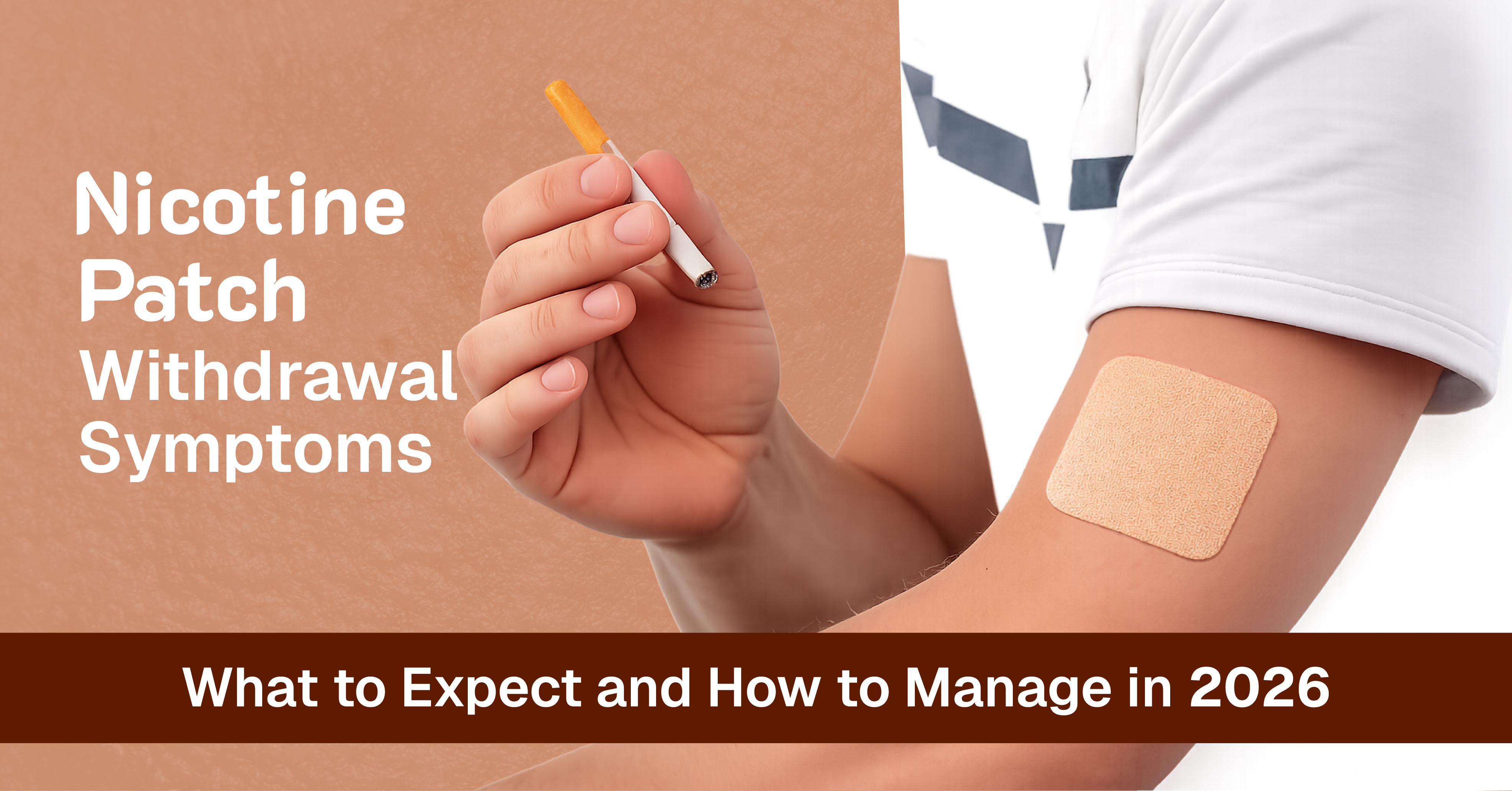
Nicotine patch withdrawal symptoms are usually mild and temporary, often occurring during dose reduction or early smoking cessation. Common symptoms include cravings, irritability, sleep changes, and headaches. With correct patch use and gradual tapering, most people can manage these symptoms safely and effectively.
Introduction
Quitting smoking is one of the most important steps for long-term health, yet nicotine dependence makes the process challenging. Nicotine replacement therapy (NRT), particularly patch therapy, remains a cornerstone of smoking cessation programmes worldwide.
Despite its benefits, many users worry about nicotine patch withdrawal symptoms, especially when reducing doses or stopping patch use altogether. Understanding what is normal-and how to manage it-can prevent unnecessary anxiety and improve quit success.
This guide provides a medically accurate, reader-friendly overview of nicotine patch withdrawal, aligned with current cessation practices.
Disease Overview - Nicotine Dependence and Withdrawal
Understanding Nicotine Addiction
Nicotine dependence is a chronic condition caused by repeated nicotine exposure from tobacco products. Nicotine acts on the brain's reward system, reinforcing habitual smoking behaviour.
When nicotine intake decreases-either by quitting smoking or tapering patch doses-the brain requires time to adjust, leading to withdrawal symptoms.
Common Nicotine Withdrawal Symptoms
- Strong urges to smoke
- Irritability or low mood
- Anxiety or restlessness
- Difficulty concentrating
- Sleep disturbances
- Increased appetite
These symptoms are not dangerous but can be uncomfortable without proper support.
Treatment Overview - Quitting Smoking with a Patch
Role of Nicotine Patches in Smoking Cessation
Nicotine patches are a long-acting form of NRT designed to:
- Deliver steady nicotine levels
- Reduce withdrawal severity
- Lower relapse risk
- Support gradual nicotine reduction
They are widely recommended as a first-line treatment and can be used alone or with short-acting NRTs such as gum or lozenges.
How Nicotine Patch Therapy Works
High-Level, Non-Clinical Explanation
Nicotine patches release a controlled amount of nicotine through the skin into the bloodstream. This prevents sharp drops in nicotine levels that normally trigger cravings, without exposing the body to harmful chemicals found in cigarette smoke.
As patch strength is gradually reduced, the body adapts to lower nicotine levels-minimising withdrawal discomfort.
Nicotine Patch Withdrawal Symptoms - What to Expect
Are Withdrawal Symptoms from Patches Normal?
Yes. Nicotine patch withdrawal symptoms usually occur when:
- Reducing patch strength
- Missing doses
- Stopping patch therapy completely
These symptoms reflect the body's adjustment to lower nicotine intake-not a failure of treatment.
Common Nicotine Patch Side Effects vs Withdrawal
Patch-related side effects may include:
- Mild skin irritation
- Sleep disturbances (especially vivid dreams)
- Headaches
Withdrawal symptoms are more psychological and behavioural, such as cravings and mood changes.
How Long Do Nicotine Patch Withdrawal Symptoms Last?
For most people:
- Symptoms peak within 3-7 days
- Gradually improve over 2-4 weeks
- Emotional triggers may persist longer
Consistency and gradual dose reduction help shorten this period.
Managing Nicotine Withdrawal Effectively
1. Follow a Gradual Tapering Plan
Reducing patch strength step-by-step allows the brain to adapt smoothly. Abrupt discontinuation increases withdrawal intensity.
2. Use Combination Therapy if Needed
Long-acting patches manage baseline cravings, while short-acting NRTs help control sudden urges.
3. Maintain Consistent Patch Use
Skipping days or removing patches early can worsen withdrawal symptoms.
Nicotine patch adjustment tips: Apply the patch at the same time daily and rotate skin sites.
4. Address Behavioural Triggers
Stress, habits, and social cues often trigger cravings more than nicotine deficiency itself. Behavioural support and routine changes are essential.
5. Support Sleep and Mental Wellbeing
- Apply the patch earlier in the day if sleep is disturbed
- Practise relaxation techniques
- Maintain regular sleep schedules
Safety and Usage Overview
Important Safety Points
- Do not cut or modify patches
- Avoid applying to broken or irritated skin
- Remove before MRI procedures
- Keep out of reach of children
When to Seek Medical Advice
- Persistent dizziness or palpitations
- Severe skin reactions
- Ongoing sleep disruption
Disclaimer: This content is for informational purposes only and does not replace medical consultation.
FAQs
1. Do nicotine patches cause withdrawal symptoms?
Nicotine patches reduce withdrawal compared to quitting cold turkey. Symptoms may still occur during dose reduction or discontinuation but are usually milder and temporary.
2. Is it normal to feel anxious when reducing nicotine patch strength?
Yes. Anxiety is a common nicotine withdrawal symptom and typically improves within days as the body adjusts.
3. Can nicotine patch side effects feel like withdrawal?
Some side effects, such as headaches or sleep changes, may overlap with withdrawal symptoms. Correct dosing helps distinguish and reduce both.
4. How can I manage strong cravings while on a patch?
Combination therapy using gum or lozenges, along with behavioural strategies, is often effective.
5. When should I stop using nicotine patches?
Most programmes last 8-12 weeks with gradual tapering. Duration varies based on individual nicotine dependence.
Key Takeaways
- Nicotine patch withdrawal symptoms are usually mild and short-lived
- Gradual tapering reduces discomfort
- Consistency improves success
- Behavioural support is essential
- Patch therapy remains safer than smoking
Conclusion
Experiencing nicotine patch withdrawal symptoms is a normal part of reducing nicotine dependence and does not mean treatment failure. With correct dosing, gradual adjustment, and consistent use, most people can manage withdrawal comfortably while progressing towards a smoke-free life.
PatchMantra provides nicotine patches formulated to support controlled nicotine delivery and structured dose reduction. When used as directed and combined with behavioural strategies, patch therapy can help manage cravings and withdrawal symptoms more effectively.
To explore nicotine patch options and guidance on correct usage, visit PatchMantra and take a steady, informed step towards long-term smoking cessation.