Table of Contents
More from Blog
30 Jul, 2026

22 Jul, 2026
15 Jul, 2026

25 Jun, 2026

15 Jun, 2026

08 Jun, 2026
01 Jun, 2026
30 Apr, 2026

25 Apr, 2026

20 Apr, 2026
15 Apr, 2026
26 Mar, 2026

22 Mar, 2026

18 Mar, 2026

14 Mar, 2026

15 Feb, 2026

05 Feb, 2026
28 Jan, 2026

20 Jan, 2026
24 Dec, 2025
16 Dec, 2025

26 Nov, 2025
14 Nov, 2025

24 Sep, 2025
21 Sep, 2025

16 Sep, 2025
Alzheimer’s vs Parkinson’s Dementia: Why Doctors Prefer Rivastigmine Patches for Memory Care
07 Aug, 2026
5 Minutes to read
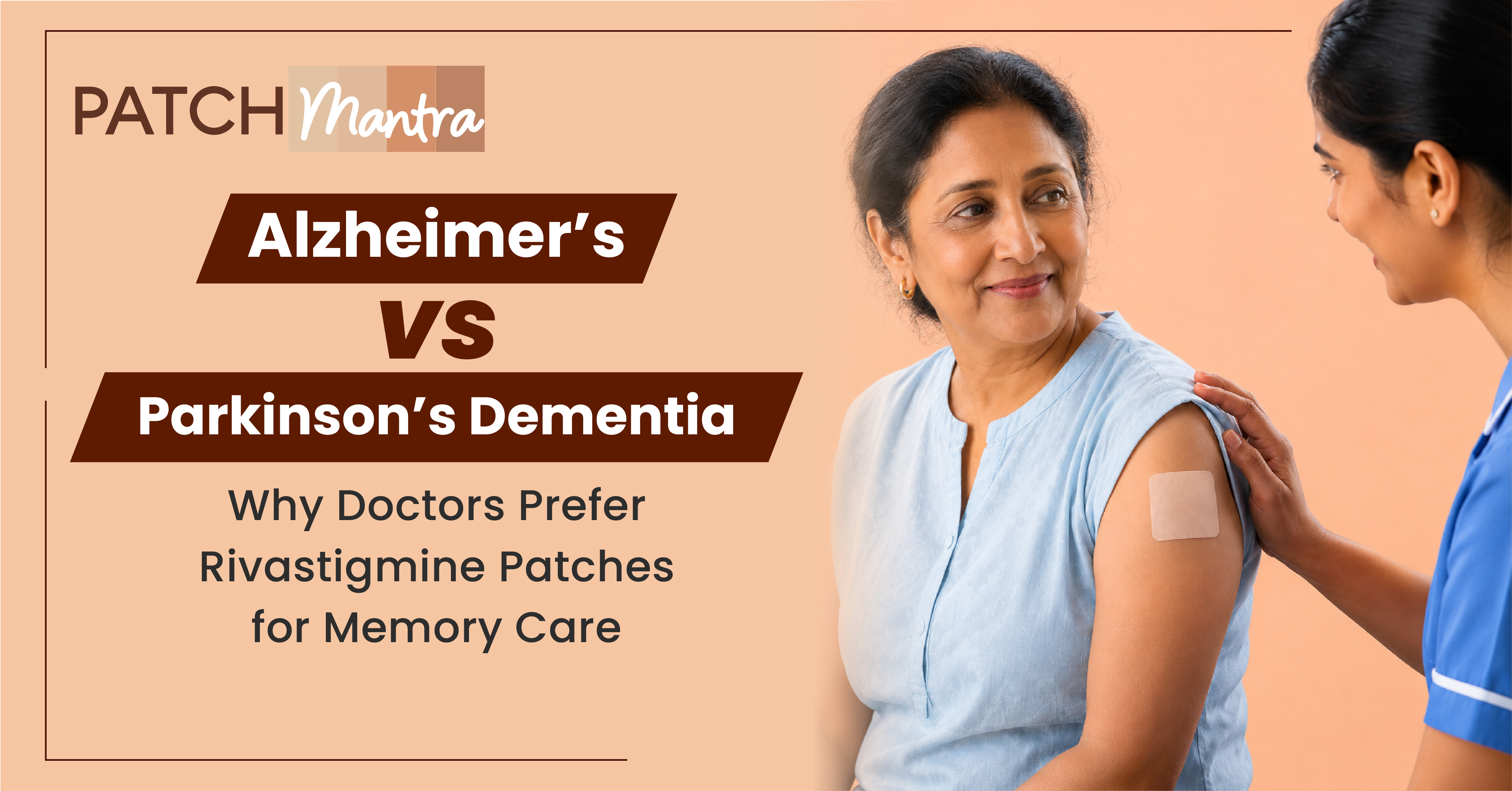
Memory loss, confusion, and cognitive decline can significantly affect daily life for both patients and caregivers.
Memory loss, confusion, and cognitive decline can significantly affect daily life for both patients and caregivers. Two common neurodegenerative conditions associated with dementia are Alzheimer’s disease and Parkinson’s disease dementia. Although both conditions involve cognitive impairment, their symptoms, progression, and treatment approaches can differ.
Among the available treatment options, rivastigmine transdermal patches have become widely used in dementia care because they offer continuous medication delivery through the skin and may improve treatment adherence in elderly patients.
This article explains the differences between Alzheimer’s and Parkinson’s dementia, how rivastigmine patch therapy works, and why many doctors prefer dementia treatment patches for long-term cognitive support.
Introduction
Understanding Alzheimer’s Disease vs Parkinson’s Dementia
What Is Alzheimer’s Disease?
Alzheimer’s disease is the most common form of dementia. It mainly affects:
- Memory
- Thinking ability
- Language skills
- Behaviour
- Daily functioning
Symptoms usually develop gradually and worsen over time.
What Is Parkinson’s Disease Dementia?
Parkinson’s disease dementia develops in some people living with Parkinson’s disease, particularly in later stages.
In addition to memory problems, patients may experience:
- Tremors
- Muscle stiffness
- Slowed movement
- Visual hallucinations
- Attention difficulties
Quick Answer (Featured Snippet Style)
Why are rivastigmine transdermal patches used in dementia care?
Rivastigmine patches are commonly used in Alzheimer’s disease and Parkinson’s disease dementia because they deliver medication continuously through the skin, support cognitive symptom management, and may improve convenience and treatment adherence compared to oral medication.
How Rivastigmine Patch Therapy Works
What Is Rivastigmine?
Rivastigmine is a cholinesterase inhibitor used to help manage symptoms of cognitive decline in certain dementia conditions.
It works by increasing acetylcholine levels in the brain, which play a role in:
- Memory
- Attention
- Learning
- Cognitive processing
Why Transdermal Patch Therapy Is Preferred
Unlike oral medicines, rivastigmine patches release medication gradually through the skin over 24 hours.
This delivery method may help:
- Maintain stable medication levels
- Simplify once-daily dosing
- Support patients with swallowing difficulties
- Improve caregiver convenience
- Reduce missed doses
Rivastigmine Patch for Alzheimer’s Disease
Memory Support in Alzheimer’s Care
In Alzheimer’s disease, rivastigmine patches are commonly used to support:
- Mild-to-moderate cognitive symptoms
- Daily routine management
- Attention and memory function
While the patch does not cure Alzheimer’s disease, it may help slow symptom progression in some patients under medical supervision.
Why Caregivers Prefer Patches
Many caregivers find patch therapy easier because:
- Medication is applied once daily
- Monitoring is simpler
- Elderly patients may tolerate patches better than tablets
- Administration errors may be reduced
Rivastigmine Patch for Parkinson’s Dementia
Cognitive Decline in Parkinson’s Disease
Parkinson’s disease dementia often includes both motor and cognitive symptoms.
Patients may experience:
- Forgetfulness
- Reduced concentration
- Visual confusion
- Mood changes
- Difficulty completing tasks
Benefits of Patch Therapy in Parkinson’s Dementia
Doctors may recommend rivastigmine patches for Parkinson’s dementia because patch therapy avoids repeated oral dosing and supports continuous medication delivery.
This can be especially useful for elderly patients managing multiple medications.
Dementia Treatment Patch vs Oral Medication
|
Feature |
Rivastigmine Patch |
Oral Medication |
|---|---|---|
|
Administration |
Once daily |
Multiple doses possible |
|
Delivery |
Through the skin |
Through digestive system |
|
Convenience |
High for caregivers |
Depends on patient routine |
|
Swallowing issues |
Easier for some patients |
May be difficult |
|
Medication consistency |
Continuous release |
Peaks and fluctuations possible |
Is Patch Therapy Better?
The best treatment depends on:
- Patient health condition
- Dementia severity
- Medication tolerance
- Caregiver support
- Doctor recommendations
Patch therapy may improve adherence and convenience in some cases.
Common Caregiver Questions About Dementia Patches
Where Is the Rivastigmine Patch Applied?
The patch is generally applied to:
- Upper back
- Lower back
- Chest
- Upper arm
Application sites should be rotated daily to reduce skin irritation.
How Often Should the Patch Be Changed?
Most rivastigmine patches are replaced every 24 hours.
Can Dementia Patients Bathe While Wearing the Patch?
Normal bathing is usually allowed, but direct heat exposure should be avoided unless advised otherwise by healthcare professionals.
Are There Side Effects?
Possible side effects may include:
- Skin irritation
- Nausea
- Reduced appetite
- Dizziness
Patients should be monitored regularly during treatment.
Cognitive Decline Management Beyond Medication
Lifestyle Support for Dementia Care
Comprehensive dementia care may also include:
- Structured routines
- Mental stimulation
- Physical activity
- Nutritional support
- Caregiver assistance
- Social engagement
Importance of Early Diagnosis
Early medical evaluation may help patients and families:
- Plan treatment earlier
- Improve symptom management
- Access support services
- Maintain independence longer
Hetriva Rivastigmine Patch Overview
PatchMantra Hetriva Patch is a rivastigmine transdermal patch developed to support cognitive care in patients with Alzheimer’s disease and Parkinson’s disease dementia.
Key Features of Hetriva Patch
- Once-daily application
- Continuous medication delivery
- Designed for caregiver convenience
- Supports memory care management under medical supervision
Patients should use rivastigmine patches only under the guidance of qualified healthcare professionals.
FAQ’s
Is rivastigmine used for both Alzheimer’s and Parkinson’s dementia?
Yes. Rivastigmine is commonly prescribed for cognitive symptoms associated with both conditions.
Do rivastigmine patches cure dementia?
No. Rivastigmine patches help manage symptoms but do not cure dementia.
Why do doctors use dementia patches instead of tablets?
Patches may improve convenience, adherence, and continuous medication delivery.
Can dementia patches cause skin irritation?
Some patients may experience mild redness or itching at the application site.
How long does dementia patch therapy continue?
Treatment duration depends on patient response and medical evaluation.
Key Takeaways
- Alzheimer’s disease and Parkinson’s dementia both affect cognitive function.
- Rivastigmine patches are commonly used for memory care support.
- Patch therapy offers once-daily medication delivery.
- Caregivers may find transdermal patches easier to manage than oral medication.
- Daily patch rotation helps reduce skin irritation.
- Dementia treatment should always follow professional medical advice.
Conclusion
Although Alzheimer’s disease and Parkinson’s disease dementia share some cognitive symptoms, each condition requires personalised long-term care and medical management. Rivastigmine patch therapy has become an important option in dementia care because it offers convenient once-daily medication delivery and may support treatment consistency for both patients and caregivers.
PatchMantra develops transdermal healthcare solutions such as the Hetriva Rivastigmine Patch, designed to support memory care management and caregiver-friendly dementia treatment under professional medical supervision.